
American Music Honors 2026: The gate keeps opening, ever wider...

Updated: May 4
May 3, 2026
Almost three years ago now, when this website was launched, I wrote an introductory "welcome" message as its editor/publisher. One of the things I touched upon was why Bruce Springsteen was and has remained such a significant and important musical artist for me. The penultimate reason, I asserted, was that in addition to my having been deeply affected by all of the artistic qualities in Springsteen's own music, Bruce also had served as a major "gateway artist" for me, helping to turn me on to so many other great artists and their music, as well. "One of the greatest gifts I got from Bruce's music," I wrote, "was all of that other music." In that same paragraph I explained with a bit more detail how "Bruce's music served as a very important conduit for a younger listener like myself. I listened closely enough to his music - and heard/read enough of what he had to say about it - that I learned not just about the music of Bruce Springsteen, but also about the work of so many other great artists in rock-n-roll, soul, blues, country, punk, folk, etc."
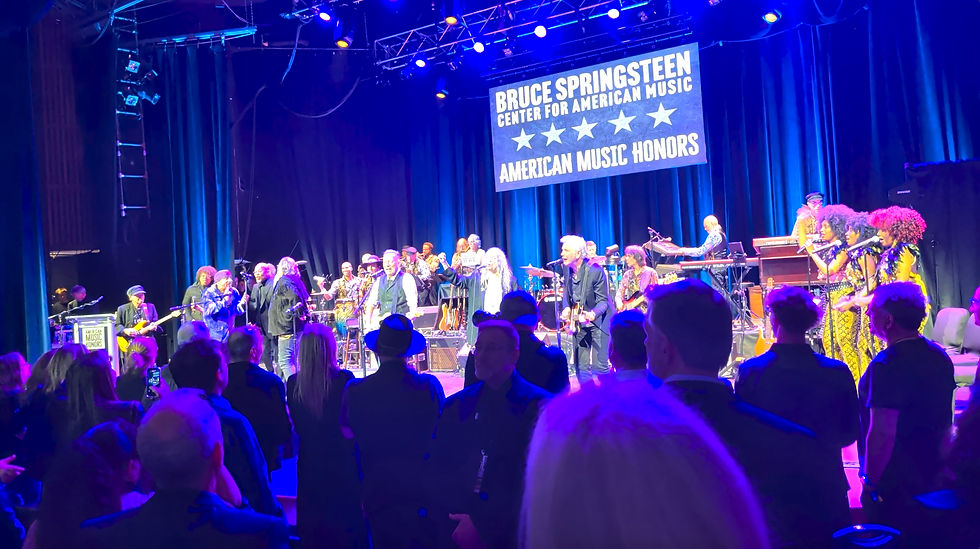
To witness the rise of The Bruce Springsteen Center for American Music and its annual American Music Honors event is to watch that gateway-artist process described above expand exponentially. I've now been lucky enough to have attended all four of the American Music Honors events held to date, and the 2026 edition that took place on April 18 was a very special one indeed. Once again the annual event was held in Monmouth University's Pollak Theatre, but this time we were all assembled in the figurative shadow of the Center's new building, now standing just about 200 yards away from us, with less than two months to go before it opens to the public.

In his introductory remarks, the Center's Executive Director, Robert Santelli, addressed what the opening of the new building will mean within the context of this annual event, and just how expansive and ambitious the Center's goals are. "American Music Honors will have a permanent spot in the Springsteen Center," said Santelli, "but [the Center] also [will] be a place where dynamic programs, education events, classes, lectures, concerts, new exhibits... they'll occur there, along with an active archive that not only houses the collection of Bruce and the E Street Band, but other American music artists, as well. Our aim is to become the hub and home of American music."
The hub and home of American music. Wow! Quite a tall order indeed, but I for one am very excited about the Center's pursuit of this goal, with all of its embedded complexities and - more important - possibilities. Bring it on!
And this year's American Music Honors event also felt all about expanding the Center's vision, inclusiveness, and accuracy in defining what constitutes American music. It was the first American Music Honors event to recognize and honor bands in addition to individual artists. It was the first AMH event to honor artists posthumously. And most significantly, it was the first AMH event to recognize, honor, and include both hip-hop music via honoree Dr. Dre and - though it remains debatable even with the artist herself - punk music via honoree Patti Smith.
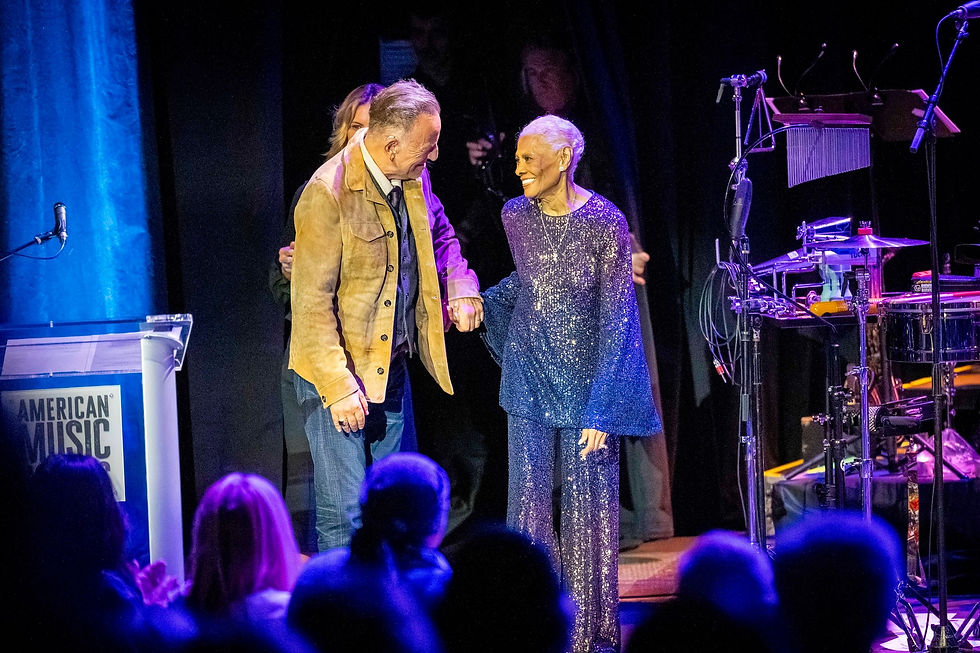
Before all of that happened, however, we first were treated to witnessing the great Dionne Warwick receive her well-deserved recognition, praise, and American Music Honor from her fellow New Jerseyan, Mr. Bruce Springsteen himself. It's especially appropriate that Warwick's was the first American Music Honor to be presented by Springsteen after the release of his "lost" album Twilight Hours last June on Tracks II: The Lost Albums. Twilight Hours let us hear Bruce celebrate his Burt Bacharach-Hal David influences in all of their glory, and in his American Music Honors remarks on Warwick, he elaborated on why she became such a great interpreter of so many of the songwriting duo's greatest songs: "She simply has the most elegant voice in the history of popular music. It is so, so sophisticatedly sexy. It's totally singular, deeply emotional, while remaining deceptively casual... She's a minimalist. She was always there at the service of the song and the lyric; there's never a wasted note. The precision in her phrasing, and the warmth in her tone, and the intelligence in her delivery and her interpretations... It turns every one of those incredible Bacharach-David songs and lyrics into a casual conversation. She doesn't perform... She just seems to inhabit the lyrics, and her performances are so pure that they're filled with a very natural and special type of spiritual grace."
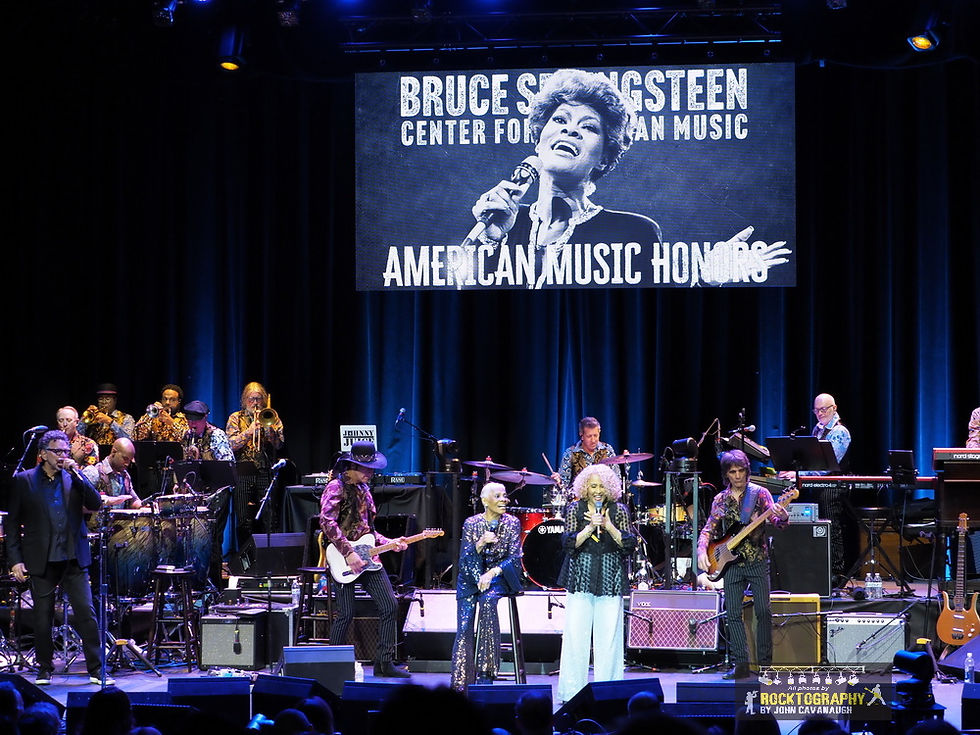
After accepting her American Music Honor from Springsteen with all of the elegance, dignity, intelligence, and down-to-Earth wit that can be found regularly on her social-media, Warwick sang her classic "Walk On By" and was joined by previous American Music Honoree (and former Warwick backing vocalist) Darlene Love on "That's What Friends Are For," which Warwick recorded as "Dionne & Friends" with Elton John, Gladys Knight, and Stevie Wonder to raise money for AIDS research in the mid-1980s. Seeing previous Honorees like Love return to speak and perform has quickly become one of the joys of each year's AMH ceremony. It's great to see (and hear) this tradition develop so rapidly. This year both Darlene Love and Steve Earle extended the tradition further. Once again house band The Disciples of Soul, joined this time by longtime Willie Nelson collaborator and harmonica-player Mickey Raphael, served as a great backing band for this performance.
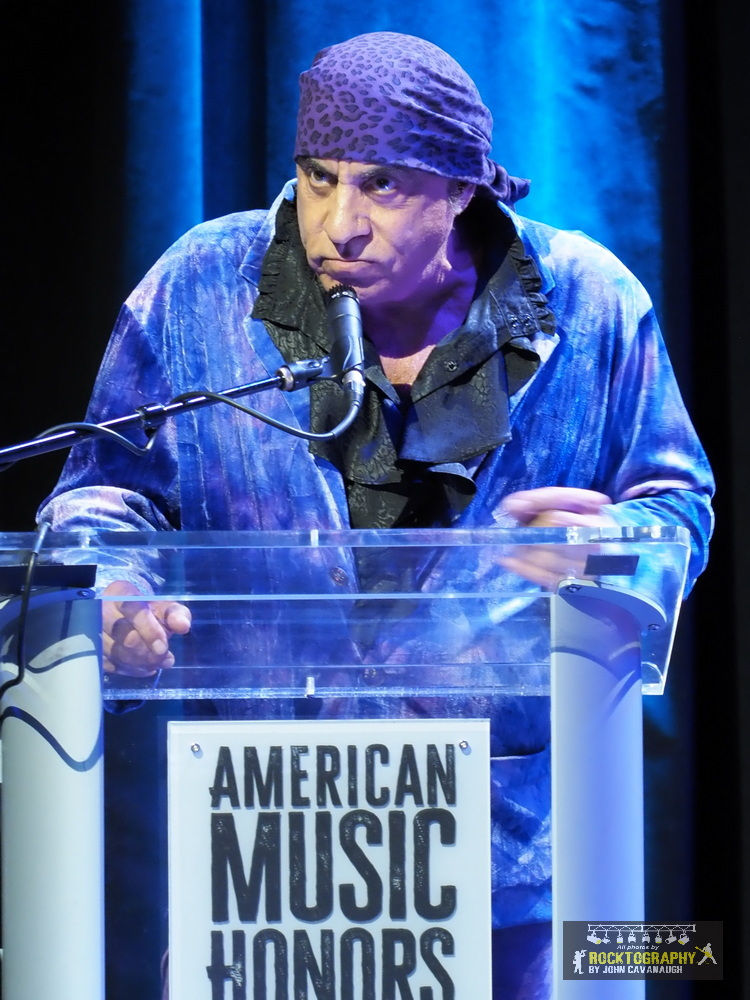
To me, the selection of The Doors as honorees remained the most "controversial" of this year, mainly for reasons outlined in our previous Letters To You report on the February announcement of this year's honorees. Stevie Van Zandt's speech on The Doors, as unsurprisingly insightful as it was at times, still left me scratching my head at least a bit over other yet-to-be-honored (and, in my view, still superior) West Coast-based bands from The Doors' era like The Byrds and Buffalo Springfield. Nevertheless, as we also noted in that report, The Doors clearly remain a personal favorite of Bruce Springsteen (and apparently also of Patti Scialfa and Van Zandt, of course,) and from the beginning of the American Music Honors' annual selection of honorees, there always has been an element of "favorites - and even friends - of Bruce's" in the selection process. I'm okay with that overall, have come to accept it, etc. It is still called the Springsteen Center for American Music, after all.
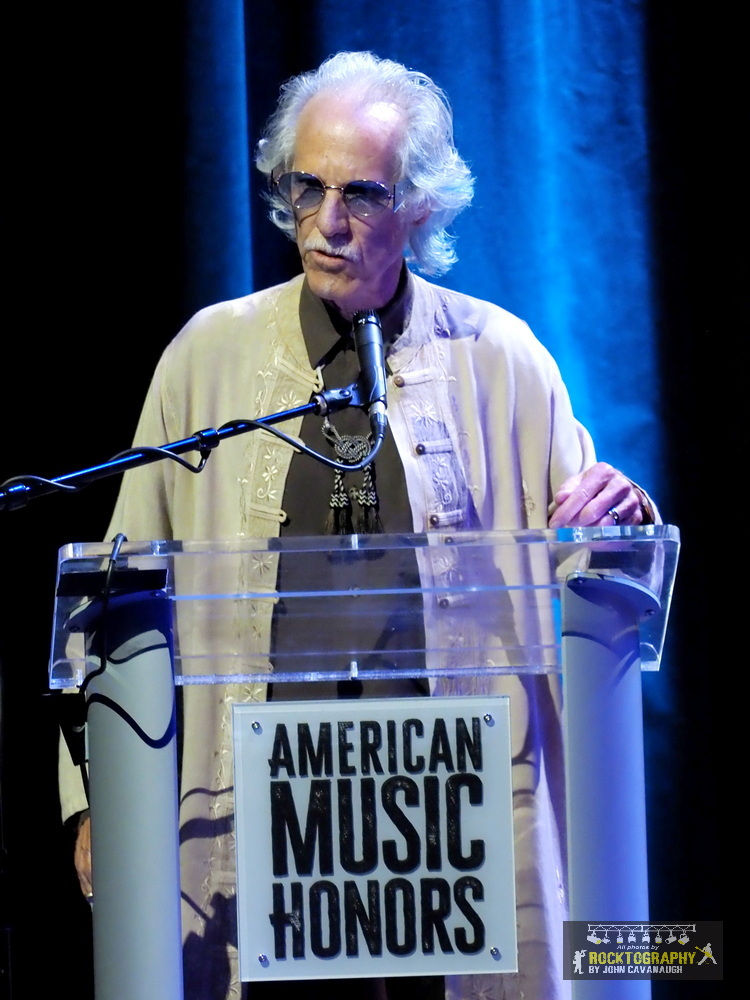
More important, surviving Doors member John Densmore, who turned out to be the only member able to attend and accept the band's honor (due to the illness of other surviving member Robbie Krieger's wife,) presented himself onstage as one of the coolest, smartest, and kindest humans on the planet. His humility, his knowledge of and respect for all of his fellow honorees and their respective musical genres, as well as his "team-player" approach to collaborating with the other musicians throughout the evening, were truly a pleasure to behold. It offered an especially pleasing counterpart to the darker aspects of humanity with which The Doors' music, imagery, and experiences often have been associated.
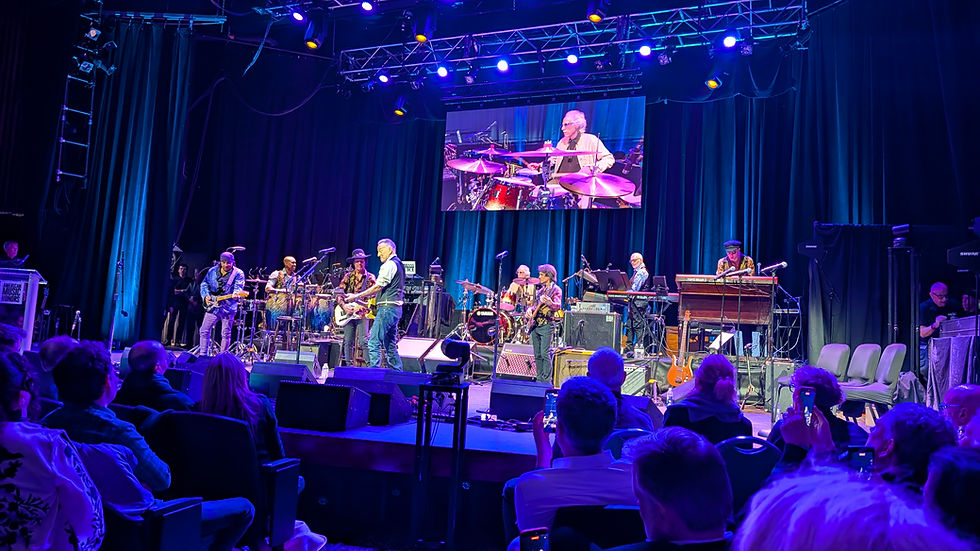
Besides, how often do you get to witness Bruce Springsteen, accompanied by the Disciples of Soul and Densmore joining in on drums, state humbly that "there's no one in the room in danger of filling Jim Morrison's leather pants tonight, I can tell you," yet still valiantly attempt his best Morrison (and - along with additional guitarist Stevie Van Zandt - their best Robbie Krieger) on "Light My Fire?"
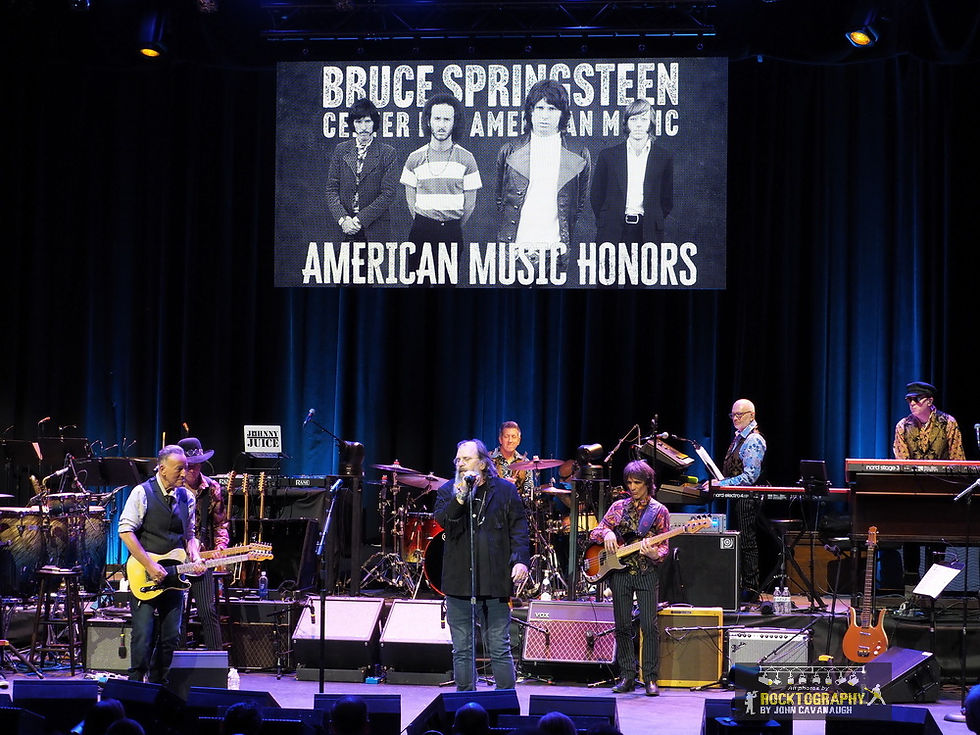
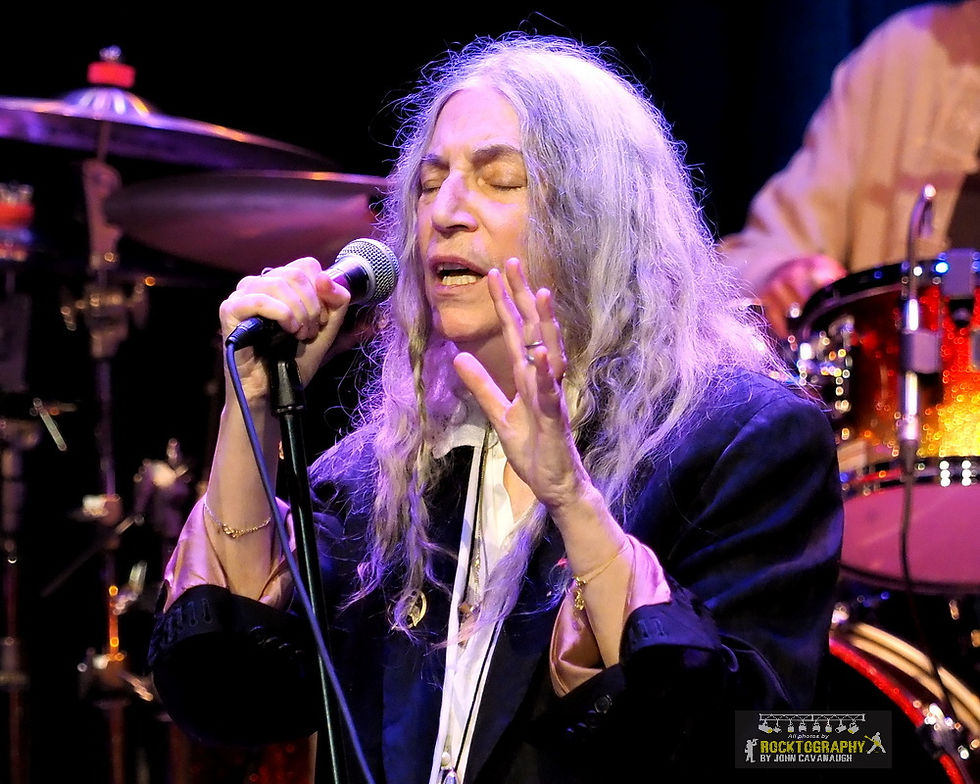
Or Steve Earle and the Disciples of Soul - with Springsteen remaining on guitar, Densmore remaining on drums, and Mickey Raphael returning on harmonica - deliver a tasty "Roadhouse Blues?" Or, for that matter, yet-to-be-officially-honored Patti Smith (also accompanied by the Disciples of Soul and Densmore remaining on drums) appear onstage early to sing on a solid full-band version of "The Crystal Ship?"

Next up, another E Street Band member - Mighty Max Weinberg - served as a surprise presenter for what turned out to be - at least apparently - a surprise set of band-members as honorees. When the 2026 American Music Honors lineup was announced last February, all that was stated in regards to The Band was that there would be a posthumous "musical tribute" to the group. Specific presenters were identified and listed for all of the artists being honored except for The Band. Therefore, there was every reason to believe that The Band would not actually be recognized with an awarding of American Music Honors, but "just" the musical tribute.
If that was indeed the original plan, apparently - and fortunately - it changed somewhere along the line. Max Weinberg presented official American Music Honors to The Band, and Levon Helm's daughter, singer-songwriter Amy Helm, was in the house to accept the Honors award on behalf of all of the families of all five late members of The Band: Rick Danko, Levon Helm, Garth Hudson, Richard Manuel, and Robbie Robertson.
Max was the perfect choice to present, not only because of his close working relationship and friendship with Levon Helm, but also because he is among the most studious and articulate musicians on the planet. (Incidentally, how cool it would be for Max to join forces again with Bob Santelli to write a sequel to their great book The Big Beat: Conversations with Rock's Great Drummers, featuring interviews with the generations of drummers who have followed in the footsteps of the original book's interviewees, maybe even including a father-son sitdown with Jay Weinberg. Just sayin', Max...and Bob.) As Bruce Springsteen himself remarked onstage shortly after Weinberg presented the award to Helm, "That is the Mighty Max I know and love."
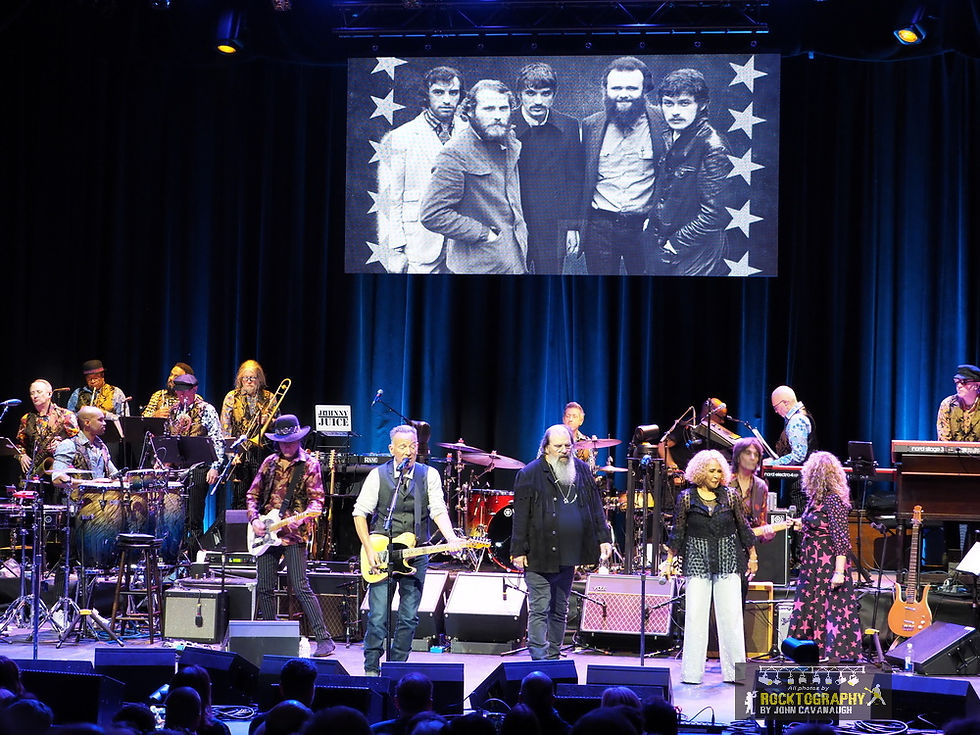

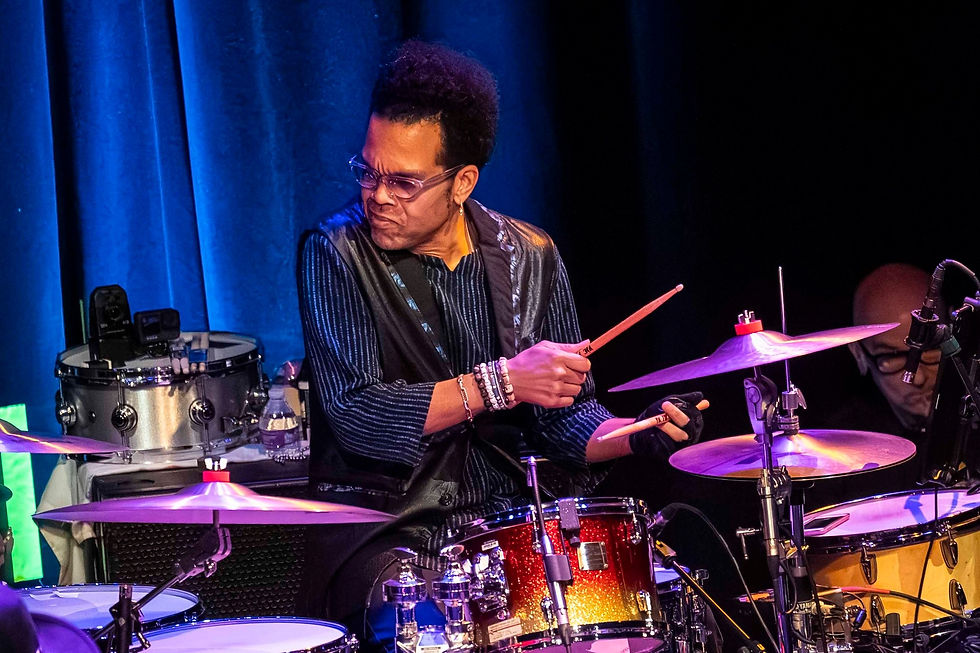
After the awards presentation and acceptance, Amy Helm joined Steve Earle, Darlene Love, Bruce Springsteen, and the Disciples of Soul (who continue to be one of the best house bands for any special event... EVER) on The Band's classics "The Weight" and "Up On Cripple Creek" (which also brought drumming royalty Charley Drayton to the stage.) These were great versions, of course, but there was a certain absent previous American Music Honoree whose presence onstage could've beautifully bookended that stellar The Last Waltz version of "The Weight."
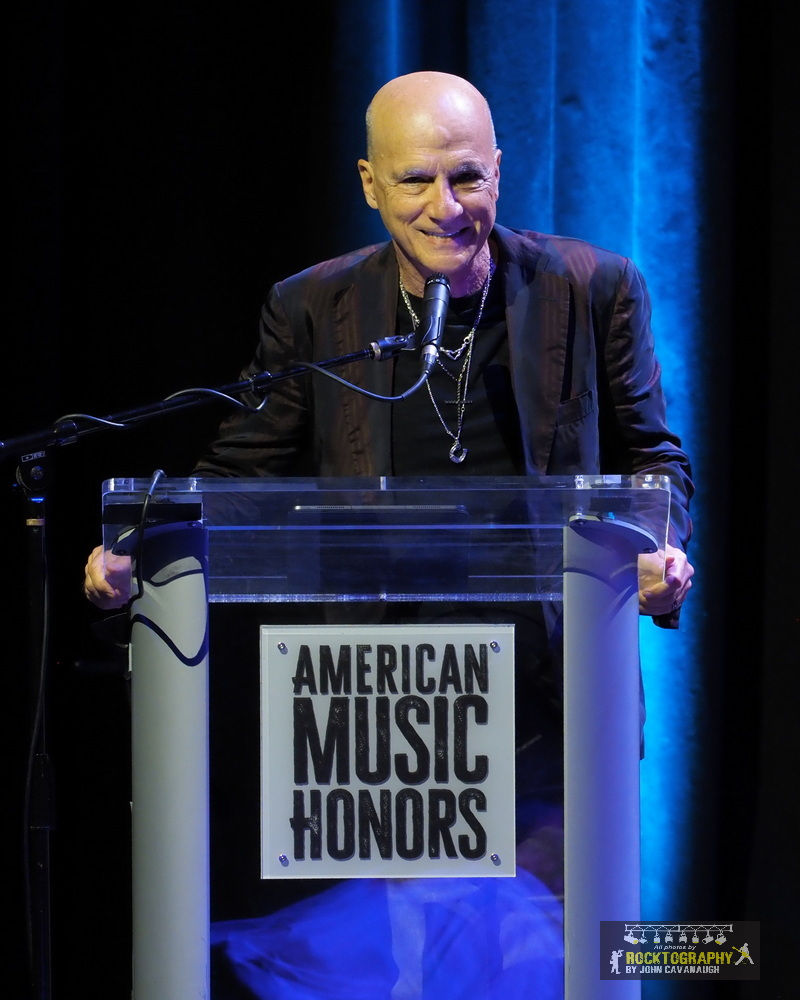
What happened onstage next, as our emcee for the evening - Brian Williams - promised it would, blew the roof off Monmouth University, and - more important - finally added the essential ingredient of hip-hop into the American Music Honors' mix. Jimmy Iovine was another perfect choice, of course, to present hip-hop pioneer Andre "Dr. Dre" Young with his American Music Honor. For decades, Iovine has known and worked even more closely with Dr. Dre than Max Weinberg did with Levon Helm. And while Iovine still can present himself onstage hilariously as that flying-by-the-seat-of-his-pants kid from the streets of Brooklyn, in reality he's just as studious and intelligent as Max is.
Iovine elaborated brilliantly on how Young, in Iovine's words, "impacted the course of music and moved that elusive rascal, the needle of popular culture, four distinct times:" through his founding membership in N.W.A. (who, along with Public Enemy, were - again in Iovine's words - "to hip-hop, what The Rolling Stones and The Beatles were to rock-and-roll,") his co-founding of Death Row Records (which brought the world major works by Snoop Dogg and Tupac Shakur, among others,) his founding of Aftermath Entertainment (the launching-pad home label for Eminem, 50 Cent, and Kendrick Lamar,) and his co-founding with Iovine of Beats Electronics, the groundbreaking consumer-audio corporation.
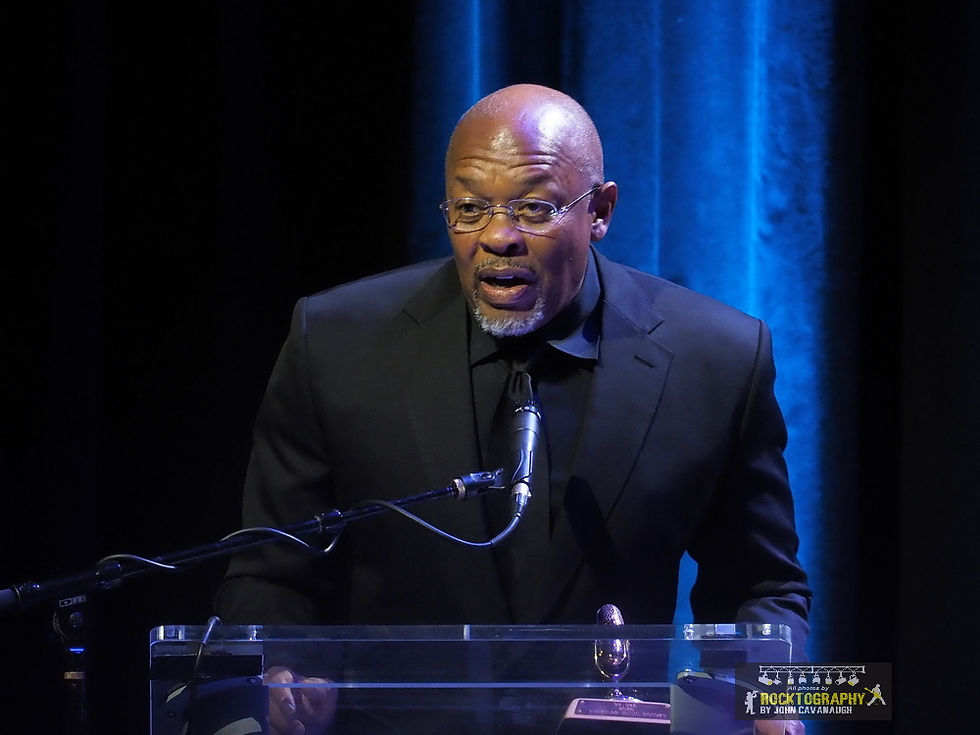
It was during the musical segment that followed the presentation and acceptance of Dr. Dre's American Music Honor, however, that we in the audience got to witness and experience not only one of the American Music Honors' all-time exciting moments, but one of its most moving ones, as well. While Dr. Dre himself did not perform during this segment, the Disciples of Soul kicked things off with a great version of the late, great Tupac Shakur's "California Love." And then... Well, during his American Music Honors award acceptance speech, Dr. Dre already had acknowledged the presence of Chuck D and Flavor Flav in the audience, and spoke lovingly of their major influence on his own music. But I don't think anybody - certainly not I - expected the next musical moment of the evening to be Public Enemy delivering an off-the-charts version of their own "Fight The Power," getting everybody up to dance and respond accordingly.
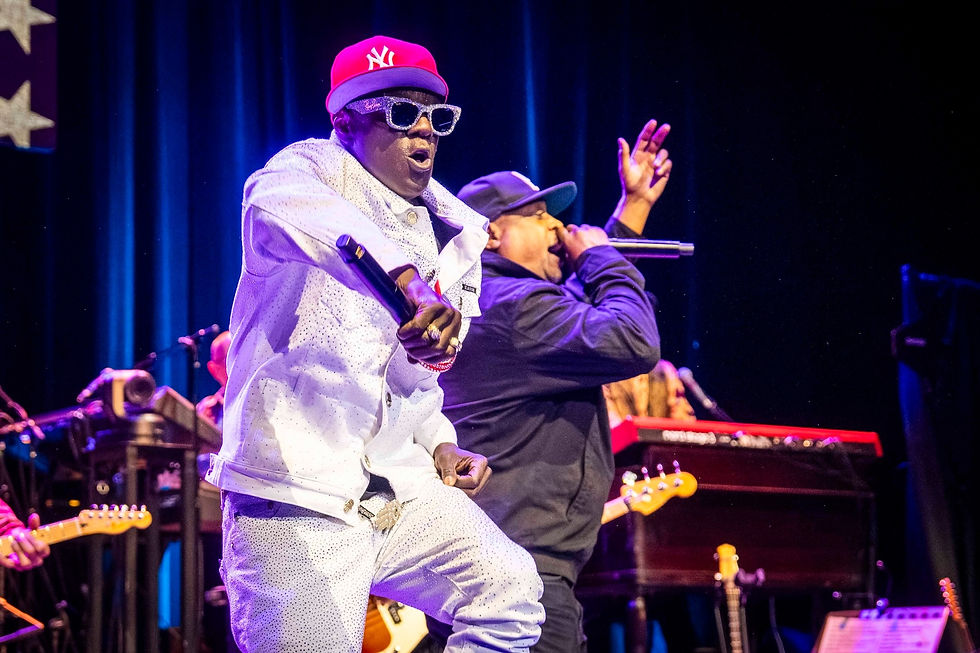
The excitement of the moment was self-evident, of course, but the moving part came when you started thinking about how all of that East Coast-West Coast feuding over the years (at least some of it instigated by government/police forces intent on destroying hip-hop culture and the people creating it) had left a too-long list of dead artistic greats and potential greats in its wake. Yet here in our very midst were some major figures from each basic camp openly embracing and celebrating each other's music, and refusing to remain so divided anymore. Now that's truly fighting the power.
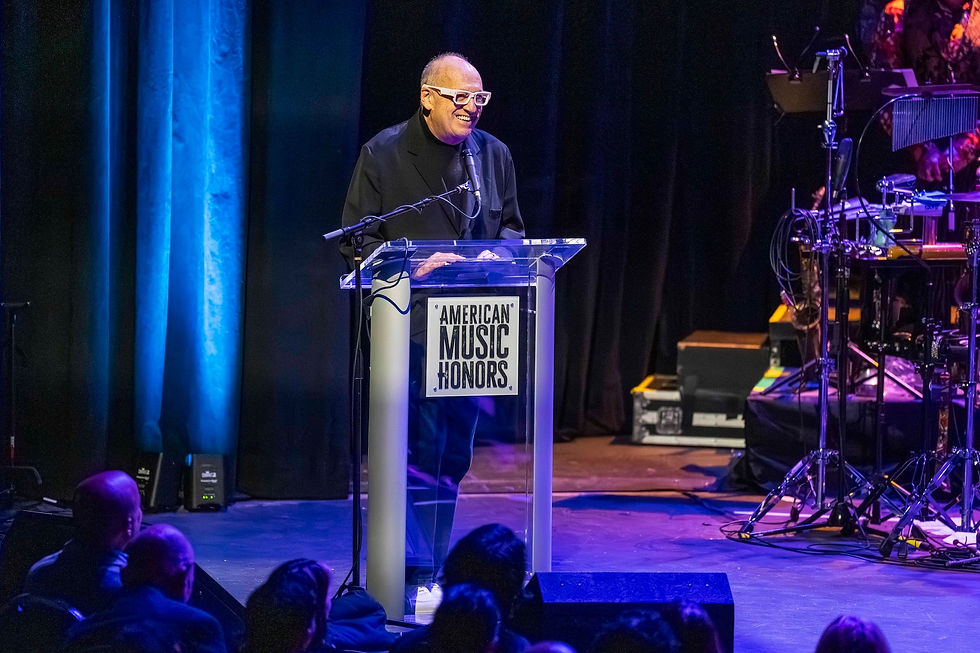
The penultimate awards segment of the evening, with Jon Landau presenting the American Music Honors for the E Street Band, still seemed as odd and superfluous as this website anticipated it would. Nevertheless, giving a few more accolades to such a beloved and fine group of musicians (who also are pretty nice people, I hear) is hardly the worst thing that one could do in life.
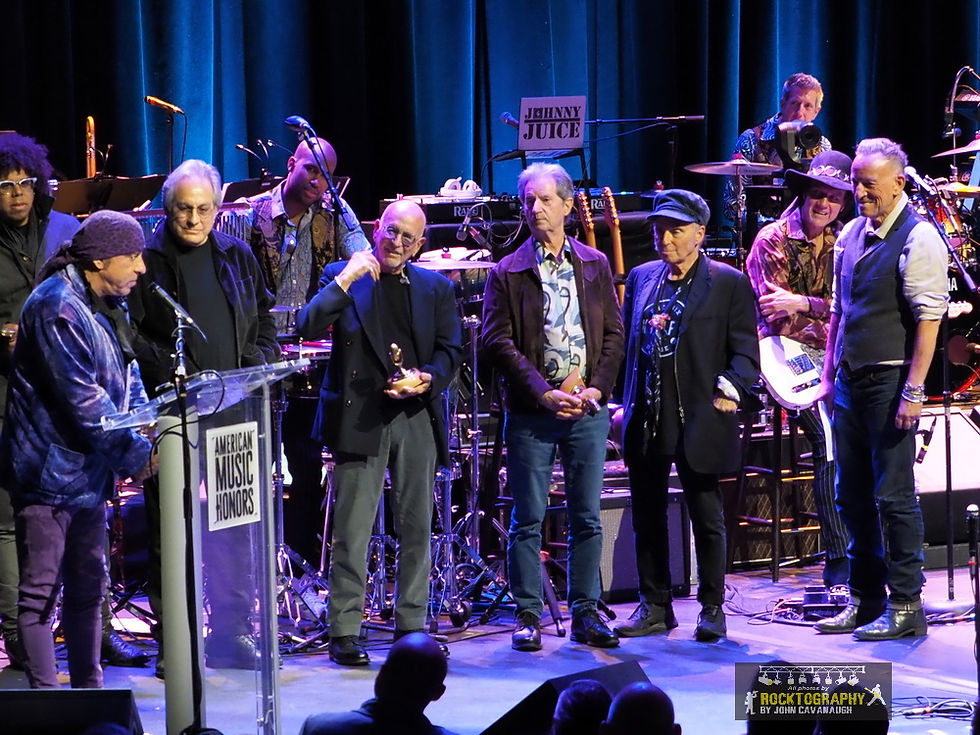
Landau's speech also included the most appropriate terminology and explanation for whom the Center honored on E Street this year, and whom it didn't: "While many musicians - working musicians - including Davey Sancious, Vini Lopez, Boom Carter, Soozie Tyrell, Charlie Giordano, Jake Clemons, and the men and women of the E Street Horns and the E Street Choir - every one of them deserving of respect and honor - have passed through E Street's portals, tonight we celebrate what we might call the long-term core band: Roy Bittan, Nils Lofgren, Patti Scialfa, Garry Tallent, Stevie Van Zandt, Max Weinberg, and in absentia, Danny Federici and Clarence Clemons."
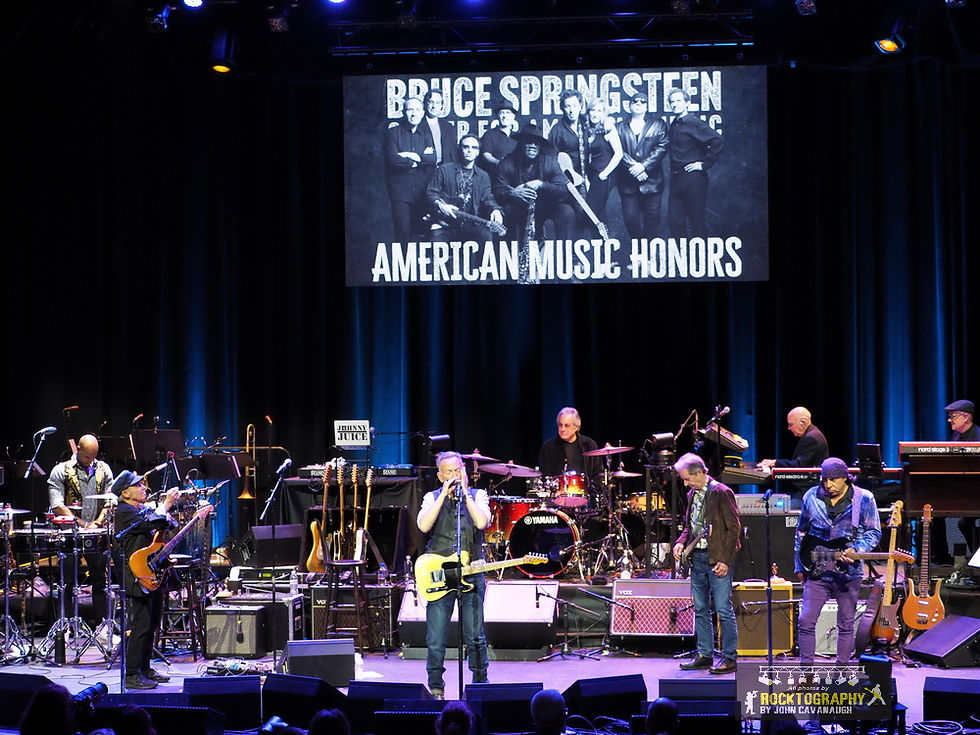
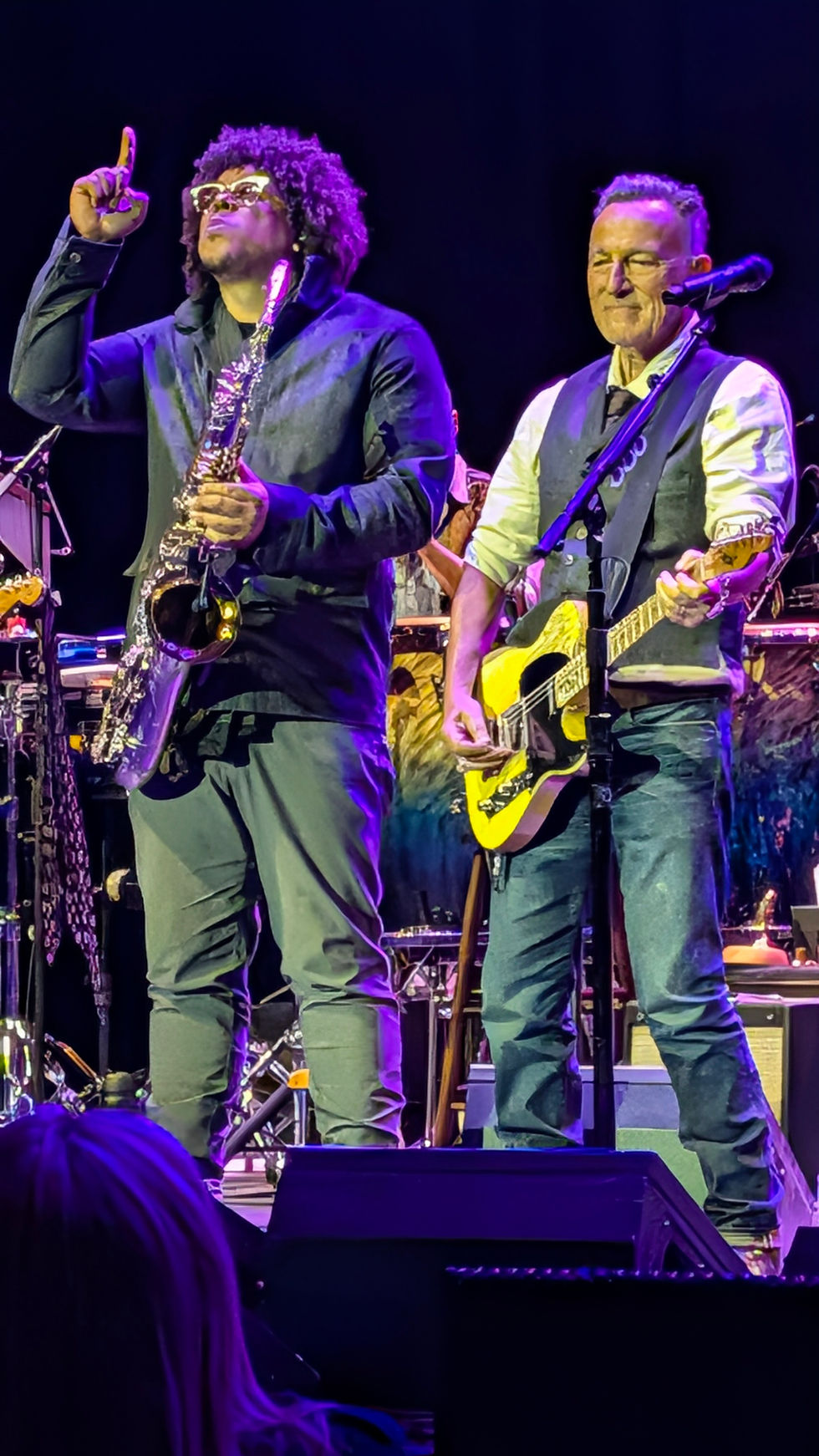
Not surprisingly, Landau expressed some well-deserved praise for the band's leader, too, referring to that famous "I saw rock and roll future, and its name is Bruce Springsteen" quote of his. "And as those of you who have seen what's going on right now on The Land of Hope & Dreams American Tour will attest," said Landau, "that statement is just as true in 2026 as when I wrote it fifty years ago."
Of course, it was disappointing though understandable that Patti Scialfa couldn't be onstage with her fellow living bandmates to accept her honor. We at Letters To You remain among Patti's biggest fans, and join with her many other fans in continuing to wish her well. We love you and miss you, Patti!
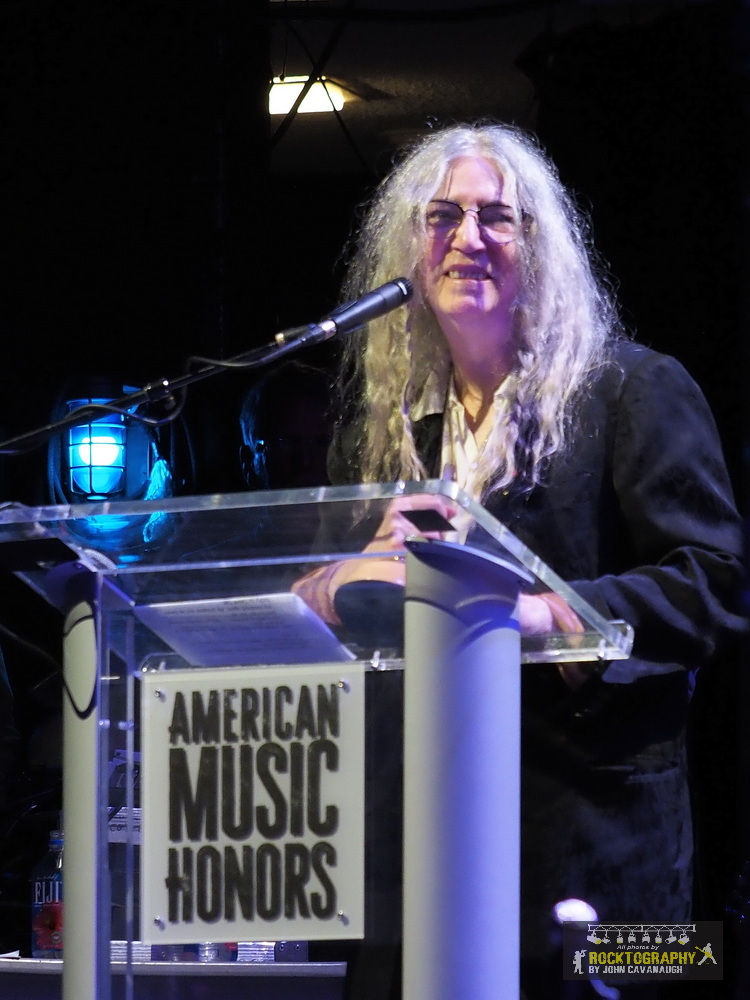
Yet as Bruce Springsteen first noted earlier in the evening, "I'm lucky; I'm a guy that has two of the most fabulous Pattis in his life." And so Bruce presented the final 2026 American Music Honor award of the evening to his beloved friend, the great Patti Smith: "a singular force in American culture... Before all the revolutionary records, before the legend, there was a young poet, a girl from South Jersey... arrived in New York, with nothing but imagination, talent, soul, spirit, love, anger, fearlessness, attitude, resolve. And in the crucible of downtown Manhattan, the grit of the CBGB scene, she didn’t just find her voice, she really redefined what a rock ‘n’ roll voice could be. When Horses was released in 1975, I listened to it and said, ‘What the fuck am I gonna do now?! I can't do that!'
"It was so powerful. It didn’t politely enter the culture; it kicked the door in. And Patti, you probably won’t remember this, but I remember it very clearly. We were in Manhattan and I met you on a street corner by accident. I said, ‘Patti! Hi! What are you doing?’ And you said, ‘I’m just waiting to take over the world!’ I said, ‘Oh, fuck; she is.’ I remember that like it was yesterday.
"But her music fused poetry and rock ‘n’ roll in a way that felt both ancient and revolutionary. It reminded us that music could still be dangerous, it could still be sacred, and it could still be free. Patti’s not just a performer. She is one of our bridges between, obviously, Bob Dylan and The Ramones, between Arthur Rimbaud and the restless spirit of rock ‘n’ roll. She brought literature to the stage, and electricity to the page. Her voice was always incantation... declaration. It always carried more than the word. It carried a conviction, an overwhelming and merciless conviction. I’m a showman; my good friend Patti is a shaman. She brings forth the spirit. Whether it’s invoking the fire of youth, the grief of loss, the quiet persistence of faith. Patti Smith has never flinched. She has stood, again and again, for art that matters. Through decades of change, she has remained fiercely herself. She is uncompromising, she is unadorned, and she is always unmistakably human. In an industry driven by trends, she’s been guided, her whole career, by this one thing: the truth, the fucking truth."
Smith hadn't prepared any written remarks from which to read as she accepted her American Music Honor, and though she spoke eloquently in doing so, she also was very moved by the award and Springsteen's presentation of it to her, clearly becoming very emotional at points. “I never even knew you liked my stuff so much," she said on-mic to Bruce in closing. "I’ll cherish every word that you said for the rest of my life. And it will give me the courage and some more strength, to keep on going.”

Smith then performed her hit-single version of "Because the Night,” with the Disciples of Soul joined by Springsteen on guitar and backing vocals, John Densmore on tambourine, and Smith's longtime collaborator/bandmate Tony Shanahan joining the Disciples of Soul on keyboards.
To close out the evening, Bruce invited all of the honorees and presenters back onstage before Smith said, "In 1986, Fred ('Sonic' Smith, Patti Smith's late husband and co-founding member of The MC5) wanted to write a song for the people. And in writing this song, and this is true, Fred studied 'Because The Night,' and he was determined to go one better..." Amidst laughter from the audience, Springsteen whispered, "Nasty!" into his mic. Smith laughed and then added, "...but in the best of ways..." Meanwhile, a mild commotion ensued near the front of the stage as Stevie Van Zandt tried valiantly to bring Dr. Dre onstage with him. "What is it, man?!," asked Smith. "Come on up!," she declared as she turned to all assembled and exclaimed, "Fred wrote this for YOU!"
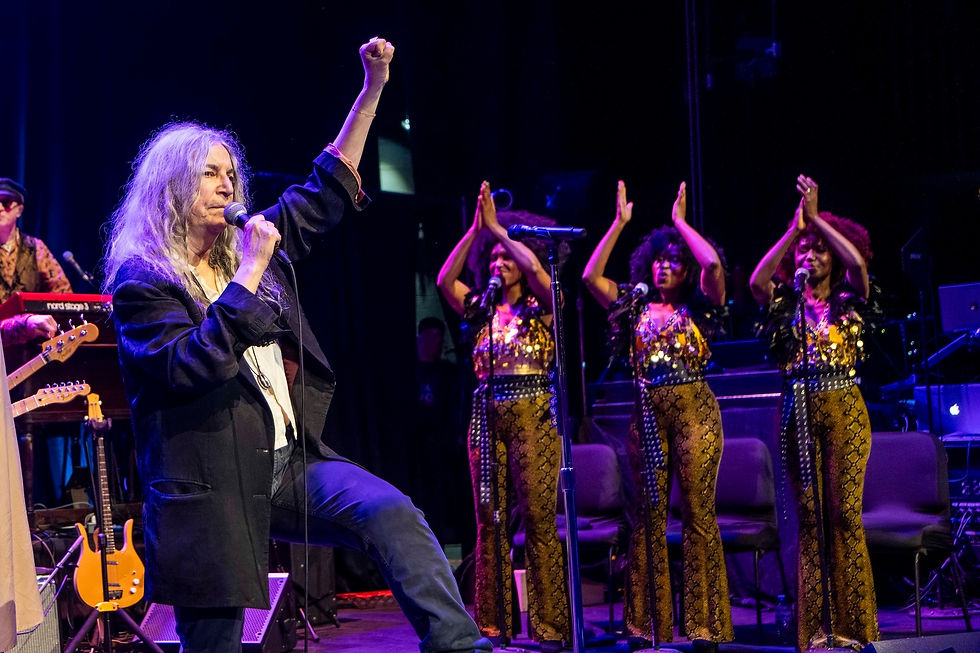
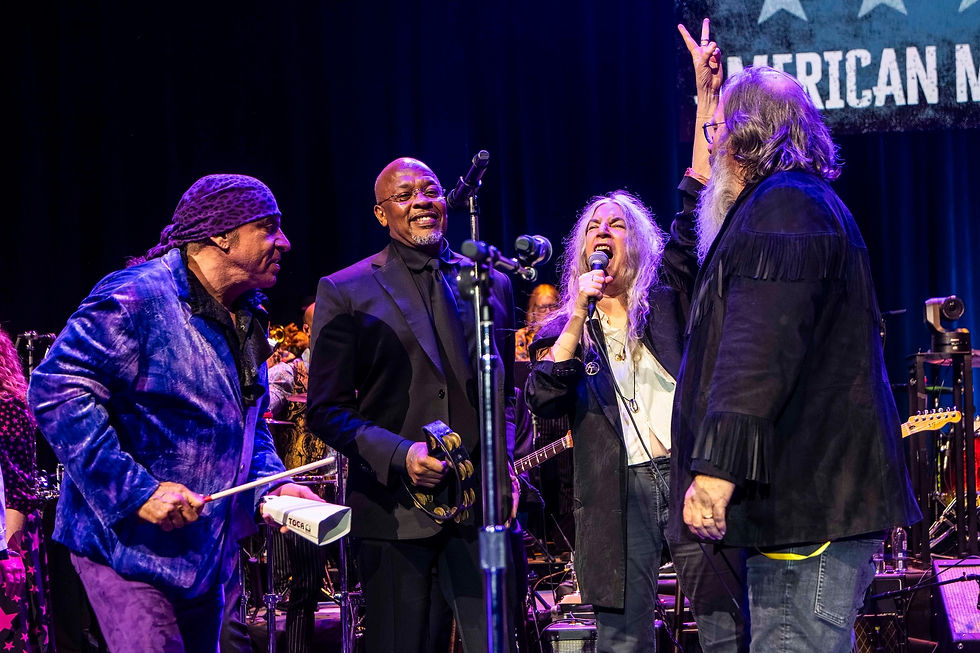
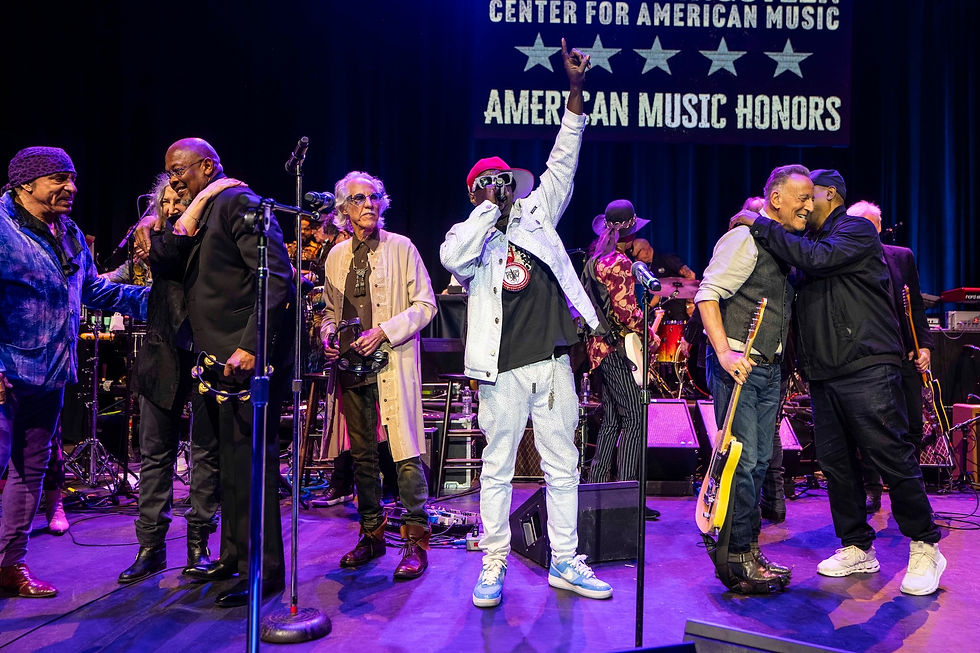
What followed was "People Have The Power" sung the way it's meant to be sung: with a whole Pollak-Theatre-ful of different voices raised in unison, guitars ringing, and drums pounding, all of it punctuated with a few "Yeah, booyyyeeee"s from Flavor Flav at the end, to boot. And yes, Stevie finally got Dr. Dre to grab a tambourine and join in, as well. Would you expect anything less from the man who brought together "rockers and rappers, united and strong" to help end South Africa's apartheid system back in '85?
You just couldn't find a better way to end this special, next-level 2026 edition of The American Music Honors... in dangerous times indeed. Long live The American Music Honors, long live American music, and long live The Bruce Springsteen Center for American Music. People have the power to fight the power. Yeah, booyyyeeee!


